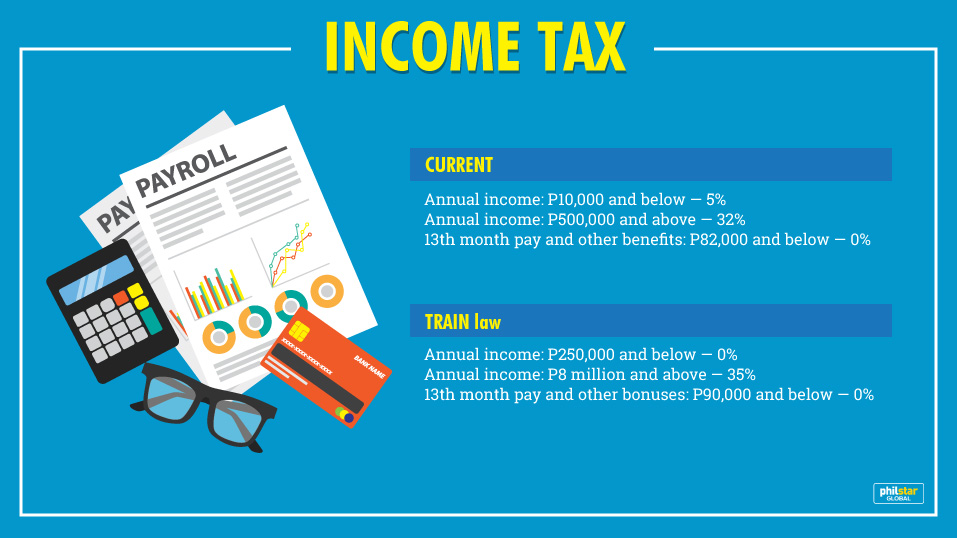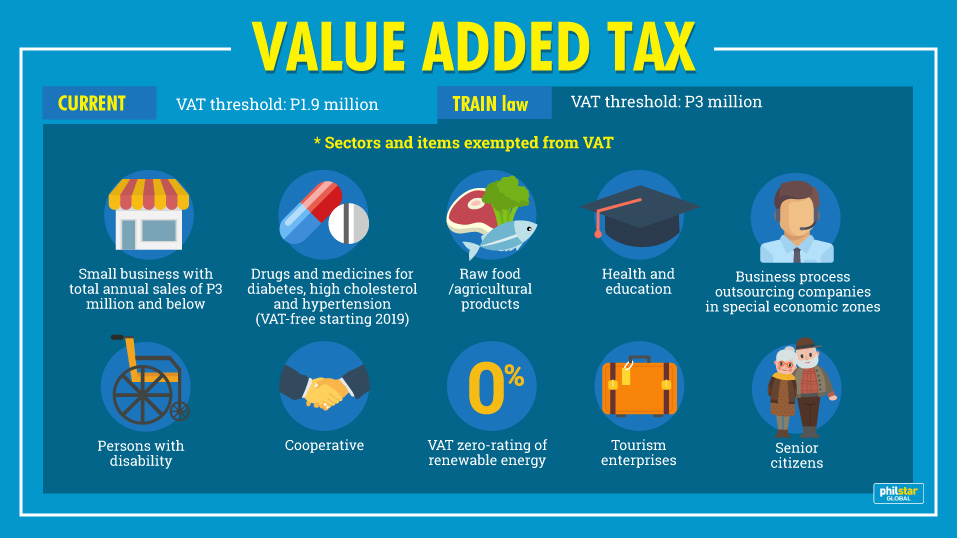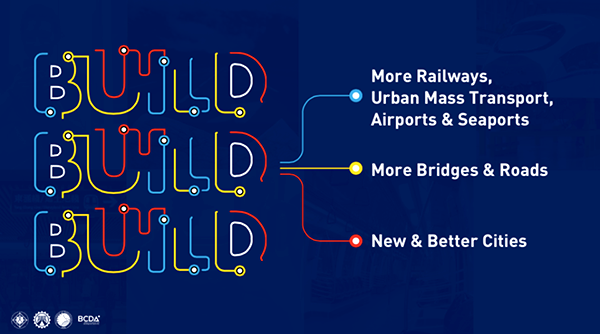
Change being the constant thing in the world, can also apply to laws. The government continues to implement and reform laws that will help our country. On January 1, 2018, President Rodrigo Duterte effectively signed the implementation of TRAIN Law, the Tax Reform for Acceleration and Inclusion Act or the Republic Act No. 10963. It introduces amendments to personal income tax (PIT), transfer tax, value-added tax (VAT), taxation sale of shares of stocks, and documentary stamp tax. The Duterte administration intends to spend PHP9 trillion on its massive infrastructure program which is expected to generate about 1.1 million new jobs every year. The National Economic and Development Authority (NEDA) also estimated the “Build, Build, Build” program contributes as much as PHP31.2 trillion to the economy over the next five years.

At first it brought good news to those minimum wage earners and those who earn P 250,000 annually or P 21,000 monthly income because they will be exempted to tax changes. Inclined with it, it also raises tax exemption for 13th month pay and other bonuses to P 90,000 which will be a big help to earner employees. Sounds good? On the other hand it became a burden to those who had an income over P 250,000 annually, since around 90% of the total individual tax payers will be exempted. Essentially, greater income is taxed at higher tax rates.
As the implementation of the first part of TRAIN Law continue to have negative effects and feedback from the citizens, and bringing down personal income drastically. While it did provide the employees in the Philippines with higher saved income because of the deduction of taxes, critics of the law said that the burden of compensating for those lost taxes are now on the consumer’s shoulder. Children, senior, unemployed citizens and minimum wage earners are experiencing this price hike unlikely before when it is not yet signed, those who earns higher set minimum wage, it set to pay taxes to cover the government projects, programs, and other expenses. These additional taxes will be passed to consumers regardless if employed or unemployed.

In order to compensate for the laws of revenue, the cutbacks have been spread towards taxing some of the day-to-day commodities, contributing to the country’s inflation. We are starting to pay excise tax to petroleum products, beverages, canned-goods, tobaccos and other necessity we need on everyday life. Some public transportation organizations are requesting fare hike (double) due to added excise tax for fuel and other petroleum products. The families who are exempted in the tax changes are still affected by the TRAIN Law considering all their expenses like food, transportation, electric bills. We can say we will have a higher take home pay but actually this Tax Reform Law can lead to a higher monthly bills due excise taxes.

Socioeconomic Planning Secretary Ernesto Pernia said the implementation of the first package of the Tax Reform for Acceleration and Inclusion (TRAIN) law “has been very beneficial” for the country. He said the law has improved fiscal space for the government to fund the “Build, Build, Build” program and various social programs, including the conditional cash transfer (CCT), unconditional cash transfer (UCT), free tuition in state universities and colleges (SUCs), free irrigation for farmers, and ‘Pantawid Pasada’ cash grants.
The opinion of people regarding the implementation of this law remain divided, heated discussions are ensued. Some advocates said that this is a blessing in disguise and it arrived perfectly, while some said that it is a hurriedly enacted, without the people thoroughly understanding its implications. And being the most recent and comprehensive economic legislation by far, the public sought to better understand the law and its impacts – on take-home pay, prices of goods and services, and consumer spending patterns
Many can say that this law will greatly benefit us in the next 2 years and some says that it’s a wise decision to reform it, but the steps on making it successful seems to be more burdensome than expected.
 K & L
K & L